
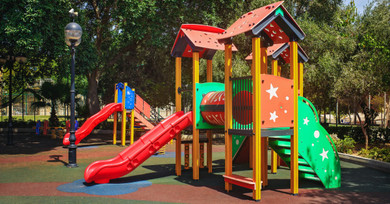
Playground surfaces protect children and reduce liability for schools, parks, and municipalities. Understanding why playground rubber surfaces develop cracks over time helps maintenance teams prevent long-term damage.
At Discount Playground Supply, we support facilities across the country with practical repair solutions that extend the life of recreational spaces. When staff understand the causes behind cracking, they can take action early and protect both budgets and public safety.
Weather Exposure and Temperature Changes
Outdoor playground surfaces are constantly exposed to sun, rain, wind, and temperature swings. Over time, ultraviolet rays dry out rubber materials and reduce their flexibility. Extreme heat causes expansion, while freezing temperatures create contraction. These repeated movements stress the surface, leading to visible cracks.
Maintenance teams should regularly inspect high-traffic and sun-exposed areas. Early detection allows crews to seal small splits before they expand. Proactive care helps preserve surface integrity and reduces the likelihood of larger structural damage.
Improper Installation Practices
Installation errors often lead to premature cracking. Contractors must prepare a stable, well-compacted base before placing rubber materials. If the base shifts or drains poorly, the surface above it will also move and break apart. Even minor inconsistencies can create weak spots.
A poured-in-place playground surface requires precise mixing ratios and careful application. When installers rush the curing process or ignore manufacturer specifications, the surface loses strength. Property managers and maintenance supervisors should work with experienced professionals who follow industry standards and proper installation procedures.
Heavy Use and Impact Stress
Playgrounds in schools, public parks, and apartment communities experience heavy daily traffic. Children run, jump, and land repeatedly in concentrated areas such as beneath swings and slide exits. These impact zones absorb continuous stress, which accelerates surface wear.
Over time, rubber materials compress and thin in these areas. Cracks form when the surface can no longer evenly distribute force. Maintenance staff should rotate equipment use when possible and promptly repair high-impact areas. Consistent monitoring prevents small stress fractures from spreading across larger sections.
Lack of Routine Maintenance
Routine maintenance extends the life of playground surfacing. Dirt, debris, and standing water weaken rubber materials and contribute to surface breakdown. When crews neglect cleaning and minor repairs, small cracks can expand, allowing moisture to penetrate deeper layers.
Maintenance teams should establish a consistent inspection schedule and address minor damage immediately. Simple patching repairs cost far less than full surface replacement. By understanding why playground rubber surfaces develop cracks over time, administrators and facility managers can protect their investment, reduce liability risks, and keep playgrounds safe for daily use.