

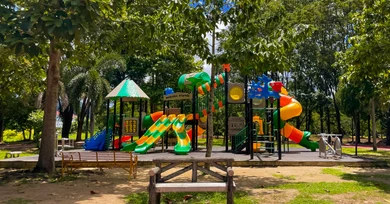
Choosing playground surfacing affects safety, maintenance, accessibility, appearance, and long-term costs. Public parks and schools need materials that can handle frequent activity while supporting a comfortable play environment. Poured rubber and loose-fill materials serve this purpose, but they require very different approaches to installation and upkeep. Discount Playground Supply goes into detail about poured rubber vs. loose fill for public playgrounds and why it’s important to understand the differences.
Understanding Poured Rubber Surfacing
Poured rubber creates a continuous surface using multiple layers of rubber material and binder. The base layer provides cushioning, while the wear layer handles everyday foot traffic and gives the playground its finished appearance. Impact-zone requirements can influence the necessary thickness of the cushioning base. A properly maintained pour-in-place playground surface can provide dependable performance for many years.
How Loose Fill Works
Loose-fill playground surfaces use individual pieces of material spread across the play area. Common options can shift and redistribute as children run, jump, and play throughout the space. Maintenance crews must regularly inspect the material and restore adequate depth where traffic displaces it. This approach differs considerably from maintaining a bonded rubber system.
Comparing Everyday Maintenance
Poured rubber gives maintenance teams a stable surface that doesn’t require routine raking or redistribution. However, cracks, splits, holes, and worn areas may eventually require targeted repairs. Discount Playground Supply offers Fast Patch repair kits with pre-measured rubber and binder to simplify this work. Loose fill generally requires more frequent attention because normal playground activity can move material away from high-use areas.
Evaluating Accessibility
Surface stability plays an important role when planners create playgrounds for users with different mobility needs. Poured rubber provides a firm, continuous path without loose pieces shifting beneath wheels or feet. Loose-fill surfaces can become uneven as traffic moves material throughout the playground. Facility managers should consider how each option supports movement through entrances, pathways, and equipment areas.
Looking at Appearance and Design
Poured rubber gives designers considerable flexibility when planning the visual character of a playground. The colorful wear layer comes in numerous colors and color combinations for a distinctive finished look. Loose-fill materials create a more natural, textured appearance but offer different design possibilities. The right choice depends partly on the surrounding park, school, or community environment.
Planning for Repairs
Surface damage doesn’t necessarily mean a public playground needs extensive replacement work. Discount Playground Supply offers repair options that help maintenance teams address smaller damaged areas efficiently. Before completing a repair, crews should evaluate:
- Location and size of the damaged area
- Required base and wear-layer materials
- Correct rubber-to-binder ratios
- Necessary surface thickness
- Appropriate repair color
Pre-measured Fast Patch kits can simplify mixing and application while supporting consistent repair work.
Protecting the Surface Over Time
Regular inspections help playground managers catch wear before minor problems expand. Discount Playground Supply recommends applying MaxxClear H2O surface conditioner after repaired areas have dried. The conditioner may restore and preserve poured rubber surfaces while refreshing their appearance. Proactive maintenance can help public facilities protect their surfacing investment for the long term.
Choosing the Right Playground Surface
Neither surfacing option suits every playground, so planners should consider traffic, maintenance capabilities, accessibility goals, and design priorities. Loose fill may appeal to facilities that prefer its initial simplicity and can accommodate recurring redistribution and inspection. Poured rubber offers a stable, layered system with repair options for cracks, splits, and holes. Discount Playground Supply provides the products and maintenance solutions needed to help public playground surfaces continue performing as intended.