

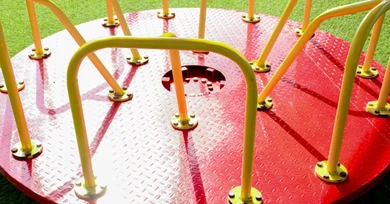
Communities across the country want playgrounds that keep kids engaged and active. The benefits of motion playground equipment reach far beyond simple entertainment. Spinners, glider swings, seesaws, and merry-go-rounds give children a reason to move and develop coordination skills they will use for years to come.
For school systems and park managers, choosing the right mix of playground components can turn a standard play area into a space that supports real childhood development. By carefully considering the needs of their community, these decision-makers can create environments where all children have the opportunity to thrive.
Why Motion Equipment Belongs on Your Playground
Motion equipment asks children to balance, push, pull, and coordinate their bodies in ways that static structures don’t. A child who spins on a roundabout or pumps a glider swing works muscle groups and builds core strength without realizing they're exercising at all.
Building Physical Strength Through Movement
Repeated-motion activities strengthen leg muscles and improve balance while also sharpening hand-eye coordination. Kids who ride seesaws learn to time their movements with a partner, while those who use spinning equipment train their bodies to adjust to changing momentum. These skills carry over into sports and dance, and they show up in everyday physical activity too.
Supporting Sensory Development
Motion equipment stimulates the vestibular system, the part of the inner ear that controls balance and spatial awareness. Regular exposure to swinging and spinning motions, along with gentle rocking, helps children regulate their senses and process sensory input more effectively. Occupational therapists often recommend this kind of play for children who need extra support building sensory regulation skills.
Choosing the Right Motion Components for Your Space
Every property has its own space constraints and age groups to consider, along with a budget that shapes what's possible. Before you invest in motion equipment, consider the following factors:
- Available square footage and required safety surfacing zones
- Age range of the children who will use the equipment most
- Weight capacity and expected traffic volume
- ADA accessibility requirements for your community
- Maintenance needs and long-term durability
Apartment managers with limited courtyard space might choose a compact glider swing, while a municipal park with room to spare can install a full spinning carousel. School systems often benefit from equipment that supports multiple children at once, encouraging cooperative play during recess.
Motion equipment gives children a chance to build strength and sharpen coordination, all while regulating their senses through play they genuinely enjoy. When you understand the benefits of motion playground equipment, you can make smarter decisions for your community's play space. Whether you're outfitting a schoolyard or a neighborhood park, the right playground components turn ordinary playtime into a space for meaningful development.