

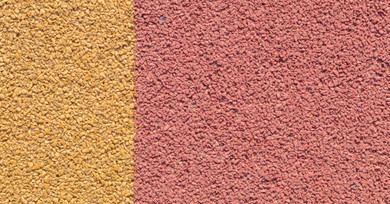
When playground directors compare flooring options, the sticker price tends to draw the most attention. But the lifecycle cost advantage of poured rubber floors tells a more complete story. One that shifts the conversation from what you spend upfront to what you save over time. Budget-conscious buyers who look past the initial investment often discover that this material outperforms competing surfaces over the full-service lifespan.
Examining the Cost of Playground Flooring
Most flooring decisions start and end at the purchase price, but that approach misses a significant portion of the actual expense. To get an accurate picture, you need to account for installation, ongoing maintenance, replacement cycles, and operational downtime.
Loose-fill materials like wood chips or rubber mulch require regular raking, replenishment, and inspection to maintain the right depth to ensure fall protection. Those recurring costs accumulate quickly across a multi-year period.
Poured rubber surfaces bond directly to the subbase and stay put. Once a crew installs the surface, it does not shift, compress, or scatter under heavy use. This stability means less time spent on maintenance and more consistent safety for everyone using the playground.
Where Poured Rubber Outpaces the Competition
The durability of poured rubber playground flooring makes it one of the strongest long-term investments a facility can make. A well-installed surface typically lasts 10 to 15 years with minimal intervention and maintains its safety ratings throughout that span without the need for constant adjustment.
Here is a closer look at where the savings can accumulate:
- Reduced labor costs: Routine maintenance takes less time compared to loose-fill alternatives, which require frequent top-offs and redistribution.
- Lower replacement frequency: The material resists UV degradation and heavy foot traffic, so facilities replace it far less often than tile or mulch systems.
- Minimal downtime: Repairs, when needed, occur in targeted sections rather than full-surface replacements, keeping the playground open and accessible.
- Sustained ADA compliance: The surface maintains its even texture over time, which reduces compliance-related costs down the line.
How to Calculate Value Over Time
A straightforward way to evaluate any flooring option is to divide the total cost of ownership by the expected service life. When you apply that formula to poured rubber, the annual cost is generally lower than that of most comparable materials, even though the upfront price is higher.
Facility managers who track their maintenance logs often find that the first few years of a poured rubber installation require little budget beyond routine inspections. That frees up resources for other playground priorities.
What the Numbers Tell You
The lifecycle cost advantage of poured rubber floors is a measurable financial reality that facility managers and park departments can verify through their own cost records. When you plan for the full lifespan of a surface rather than just the installation day, poured rubber consistently delivers value that loose-fill alternatives struggle to match. At Discount Playground Supply, we help you find the right surface for your space and your budget.